


Why Alphabet Knowledge Predicts Later Reading Success
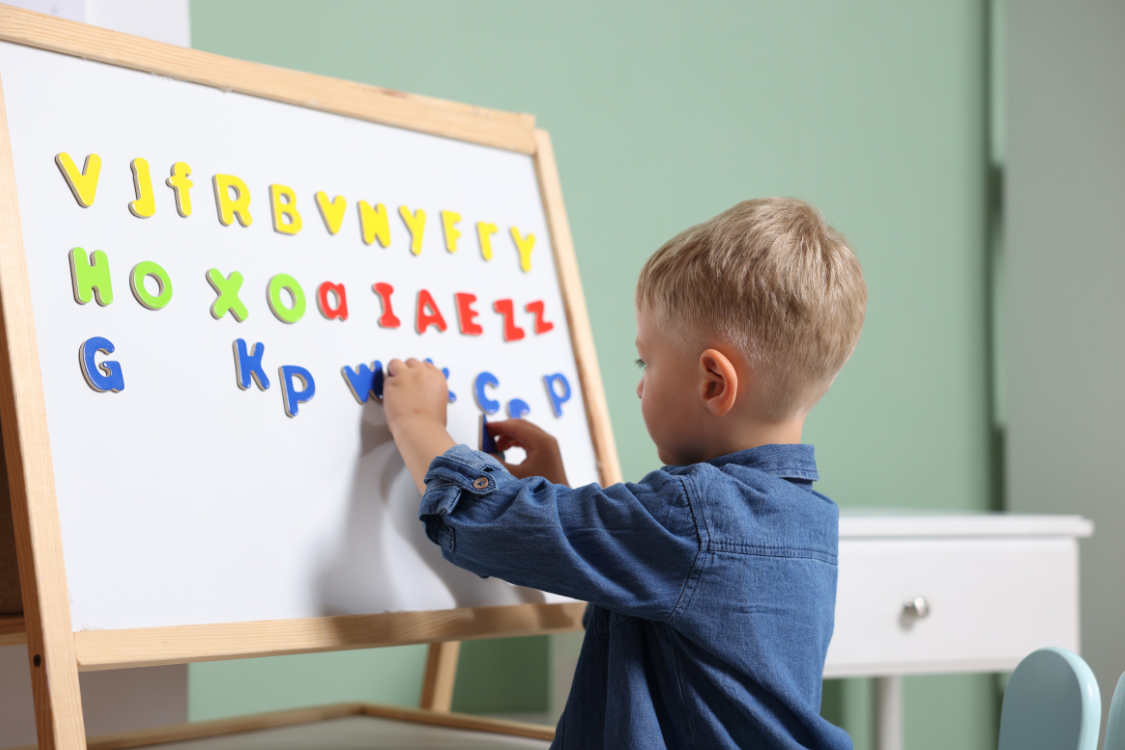
For about a century, studies have found that how many letters a young child can name is one of the best predictors of how well that child will read later. Literacy researcher Timothy Shanahan notes that alphabet knowledge even predicts reading better than IQ and is one of the best predictors of math achievement. Researchers still cannot fully explain why, but a large 2026 study adds an important refinement. Knowing letters matters most when children can also connect them to their sounds.
What a Century of Research Tells Us
In a 2024 blog post answering a teacher’s question, literacy researcher Timothy Shanahan described letter name knowledge as one of the best predictors of later reading achievement. He places the typical correlation at about .50, which means alphabet knowledge accounts for roughly a quarter of the differences in later reading scores.
That is a strong signal, but it is not a verdict. As Shanahan notes, a correlation of .50 is far from perfect. Not every child who knows the alphabet reads well, and not every child who starts school without it will struggle.
Shanahan recommends teaching letter names alongside letter sounds and how to write each letter. At home, a natural place to begin is a child’s own name, saying each letter’s name and sound as you point it out.
Why Letters Carry So Much Weight
Reading depends on the alphabetic principle, the understanding that letters represent the sounds of speech. Recognizing letters comes first, since a child cannot connect a sound to a symbol they do not yet know.
Letter names also offer clues to letter sounds. The names of b, d, m, and t contain the sounds those letters usually make, and Shanahan notes that beginners do rely on letter names as reminders of sounds, which works some of the time. When a name misleads, as when a child links w with the /d/ sound, the confusion is typically brief.
Letters and Sounds Work as a Team
Research published in Cognition in June 2026 adds an important refinement. Drawing on nationwide French data covering 810,328 first graders, researchers compared letter knowledge, knowledge of the alphabetic principle, phonemic awareness, and oral comprehension as predictors of reading fluency a year later. Knowledge of the alphabetic principle, the ability to link a spoken sound to its letter, proved the most robust predictor. Letter knowledge, phonemic awareness, and oral comprehension were each necessary, but none was enough on its own. Among children who began first grade with perfect scores in those three areas but only modest knowledge of the alphabetic principle, 43 percent were reading fewer than 30 words per minute a year later, the French threshold for reading difficulty.
Phonemic awareness, often considered the most important early skill, helped later reading only among children who also had strong alphabetic knowledge and good oral comprehension. The authors connect this to earlier research showing that phonemic awareness instruction works best when it is integrated with letter-sound teaching. The children were learning to read in French, so the findings may not map perfectly onto English, but the authors’ conclusion applies broadly. Alphabetic writing systems link letters to sounds, and instruction should make that link explicit.
What Parents Can Do at Home
One caution keeps this research in perspective. Prediction is not proof of cause, and in a later correction to his post, Shanahan acknowledged that no study has directly shown that teaching letter names improves reading achievement. He still favors spending a small amount of time teaching letters, while noting that studies of alphabet teaching on its own have not produced reading gains. Drilling letters in isolation is not the goal.
The French findings point to what matters more, which is linking each letter to its sound. Simple routines can do that. A child might trace a letter in a tray of sand while saying its sound, build a name with magnetic letters on the refrigerator, or help write a grocery list by sounding out the first letter of each item. That last activity is a beginning form of the invented spelling Shanahan encourages. Children also need to recognize letters in more than one form, which is why many families wonder whether to teach uppercase or lowercase letters first.
Grandparents, older siblings, and caregivers can all take part. Children do not need polished lessons, only regular and warm exposure from adults who enjoy letters with them. If a kindergartner still knows very few letters after steady practice, a conversation with the teacher is worth having now rather than later.
What Teachers Can Do With This Research
For educators, alphabet knowledge is one of the most practical early warning signs available. Shanahan says it must be considered when identifying kindergartners at risk, alongside phonemic awareness, rapid automatized naming, invented spelling, and oral language. Letter naming fluency appears in common screeners such as DIBELS, and a sound phonics screener combines several measures, because no single score tells the whole story.
Results matter only when they shape instruction. Shanahan’s own recommendation for kindergarten covers phonemic awareness, letter names, letter sounds, letter formation, decoding, word reading, morphology, and spelling. The French authors add that knowledge of the alphabetic principle belongs as an explicit focus within systematic phonics instruction, not as a stand-alone target.
Pacing deserves attention as well. Shanahan considers 26 weeks of letter instruction excessive, and he singles out letter-of-the-week efforts as an example of programs that go overboard.
Pairing sound work with print is one practical way to apply both findings. In his correction, Shanahan noted that including plastic letters in phonemic awareness instruction had a positive effect. Asking students to segment a spoken word and spell it with letter tiles puts that idea to work.
Alphabet Knowledge and Reading Success: Building a Strong Start for Every Reader
Alphabet knowledge is one of the most reliable early signals of later reading success, and its real value appears when children connect letters to their sounds. Parents can support it through short practice that links each letter’s name, sound, and shape. Teachers can screen early, keep letter instruction brisk, and pair sound work with print. For more Science of Reading guidance on letter sounds, phonemic awareness, and early decoding, visit the Phonics.org articles library regularly.